Can Pressure Testing Reveal a Hidden Restriction?
A kitchen faucet that barely fills a pot, or upstairs taps that weaken when laundry runs, can point to a restriction even when the rest of the system seems normal. Pressure testing compares readings at different points and under different conditions to help narrow down where flow is being reduced. It’s a measured check, not a guess.
| Test detail | What it shows |
|---|---|
| Static reading | Pressure with fixtures closed |
| Dynamic reading | Pressure while water flows |
| Typical residential target | 40–60 psi |
| Gauge range | Commonly 0–100 psi |
Seasonal temperature changes can alter household water demand, so a pressure pattern may become more noticeable when several fixtures run together. Ice storms can disrupt power and water service; if you rely on a well, note any outage or pump interruption before testing. Near Green Bank Observatory, as elsewhere in West Virginia, a careful record of symptoms helps us distinguish a line restriction from a temporary supply problem.
What Does a Pressure Test Reveal About a Blockage?
When a shower turns weak during flushing, or several upstairs taps lose pressure, the key question is whether the problem affects one fixture or a wider section of pipe. We take a pressure reading with fixtures closed, then compare it with a reading while water is flowing. A substantial pressure drop during flow can point toward a restriction, undersized passage, or failing component; the readings help locate the problem rather than identify a cause by themselves.
We also compare the affected fixtures. If one faucet performs poorly while nearby fixtures work normally, the issue may be local to that fixture or its supply.
If pressure falls throughout the house, the restriction may be farther upstream. At homes near Haddad Riverfront Park, we use this same stepwise approach: record the symptom, test, then explain what the numbers do and do not show.
The four seasons bring changing conditions, so symptoms that appear during autumn temperature swings deserve attention to exposed plumbing and freeze-prevention needs.
Can Freeze-Thaw Stress Cause a Hidden Restriction?
Freeze-thaw cycles can stress exposed plumbing and foundations, and movement or damage around a line may affect water delivery. Pressure readings help show whether flow falls across a broader run or at a specific point, but a test alone cannot confirm a crack or obstruction. We look at where the reading changes and recommend further inspection when the result warrants it.
A pressure test is especially useful when the symptom repeats under the same conditions. For example, note whether the pressure drop starts when laundry runs, whether hot and cold taps behave differently, and whether the problem is limited to one floor.
That detail makes the test more useful. Kanawha State Forest is a familiar local landmark, but homes across the region can face different pipe layouts and access conditions; we assess the actual plumbing rather than assume one cause fits every property.
When Should You Call a Pro Instead of Testing DIY?
A homeowner can safely note which fixtures are affected and whether the problem changes when another tap runs. That observation is useful.
Call a plumber if readings are unclear, pressure changes sharply, or the suspected restriction is behind a wall, at the main line, or connected to well equipment. Avoid adjusting controls or opening pressurized components without knowing their function.
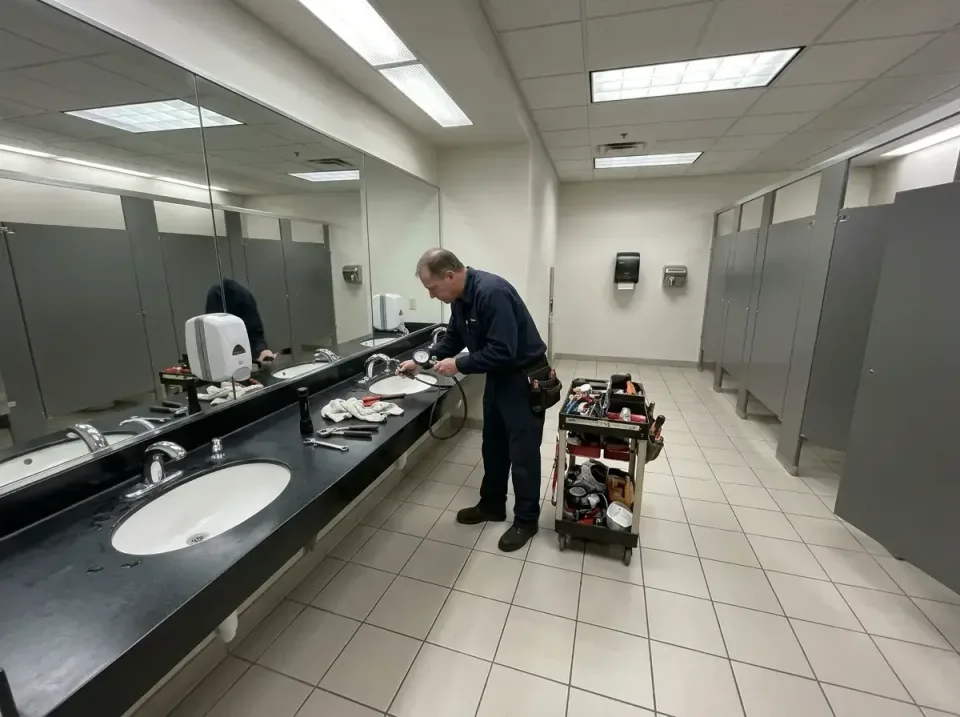
Our crew uses a gauge at an accessible test point, often a hose bib, and compares readings with fixtures closed and flowing. We explain the result before recommending work.
A restriction in a service line can require different access than a blockage near a fixture, so locating the pressure change matters before any repair is discussed. For a related symptom, see what to check when pressure drops during laundry.
What Should You Ask After the Test?
Ask where the pressure was measured, what changed when water began flowing, and whether the same drop appeared at more than one fixture. Those answers help separate a localized issue from a restriction affecting the home. If the pattern points to a supply line, ask what further inspection is practical before approving excavation or replacement.
Heavy rain can raise sediment in private wells, which may contribute to a flow problem; tell the plumber if your well water changed after a storm. That history can help guide the next check, though it does not prove sediment is the cause.
Our West Virginia crew tests before recommending repairs, explains findings in plain language, and confirms the proposed scope before work begins. Read how a plumber can trace low pressure to a clogged water line if you want more detail on that possibility.
Which Pressure Test Option Fits Your Problem?
If a shower goes weak but the kitchen faucet stays steady, the fault may be limited to one branch; a house-wide pressure problem calls for a broader check. The test findings guide the repair path.
| Option | Best for | Key detail |
|---|---|---|
| Whole-house pressure assessment | Several fixtures lose flow | Compare static and flowing pressure |
| Shower-focused check | Weak shower flow | Confirm whether other fixtures are affected |
| Single-fixture check | One faucet struggles | Inspect the local supply path |
| Well-system assessment | Pressure varies at multiple taps | Well switch settings often use 20/40 or 30/50 psi |
The right starting point depends on where the reading changes, not simply how low one faucet feels. Four distinct seasons across most of West Virginia can bring different water-use patterns, so record when symptoms occur.
For homes near Charleston Town Center, as elsewhere, tell the plumber which fixtures were running during the test. Ask what each reading indicates before choosing a repair.
Prepare Your Home for a Pressure Test
-
Track the symptoms: Identify which taps weaken and note whether the change begins when another fixture runs.
-
Clear the test area: Move stored items away from the pressure regulator or accessible test point so the technician can inspect safely.
-
Keep well equipment reachable: If you use a well, leave access to the pressure tank and confirm the pump’s power access is clear.
-
Share recent conditions: Tell the plumber if flow changed after rain or a cold spell; cold winters bring frozen-pipe service calls, so timing can help explain what changed.
-
Allow for testing: The technician may check pressure at a hose bib and may need fixtures closed, then running, to compare readings.
-
Review results before repairs: Ask what the readings show and whether further inspection is needed before approving work.
Near Summersville Lake, just as in other parts of the state, hilly terrain and property layout can affect access to wells and service equipment. Mention access limits when scheduling. Homes close to Seneca Rocks may also have equipment in locations that take extra preparation to reach, so keep paths clear and tell the crew what to expect.
Ready to Trace a Hidden Water-Line Restriction?
If a faucet barely fills a pot or pressure drops across several rooms, compare symptoms before changing valves or equipment. Static pressure is measured with fixtures closed; dynamic pressure is measured while water flows, and the difference can help pinpoint where pressure is being lost.
A dry spell can reduce private well yield, so a weak-flow test may need to be considered alongside the well’s supply. Flash flooding can affect low-lying properties; let the plumber know if flooding or water intrusion occurred near your equipment.
Where hilly terrain makes well access difficult, describe the route and equipment location before the visit. From Huntington Museum of Art to Huntington Riverfront Park, our service area includes varied property conditions.
Contact West Virginia Plumbing Pros at (877) 773-0781 or request Water Pressure Testing; we’ll test, explain the findings, and confirm options before work begins.