Why Do Upstairs Taps Lose Pressure in West Virginia Homes?
When upstairs taps lose pressure, the cause is often a restriction, a pressure-control problem, or limited supply not simply the height of the fixture. Compare flow at several taps first; if the downstairs fixtures are strong while the upstairs ones struggle, the pattern helps narrow the diagnosis.
West Virginia University is a useful reference point for understanding how varied homes and service conditions can be across the state; a plumber needs to assess the actual plumbing rather than assume one cause fits every property. The West Virginia State Capitol grounds sit in a region with homes that have different layouts and plumbing histories, so pressure symptoms need to be checked at the fixtures themselves.
Four distinct seasons across most of West Virginia also mean household water use and pipe conditions change over the year. Start with these checks:
-
Compare floors: Run one upstairs and one downstairs tap separately and note which loses flow.
-
Check multiple fixtures: See whether both hot and cold water are affected.
-
Notice timing: Record whether pressure changes when another tap or appliance runs.
If the pattern persists, we can test pressure and trace the likely restriction before recommending a repair.
Why does pressure fall on the upper floor?
Water has to travel farther and overcome elevation to reach a second-floor fixture, but that alone does not explain a sudden or severe change. A narrowed pipe, partly closed valve, worn regulator, or aging galvanized steel can add resistance; the problem becomes more noticeable at the highest taps.
We compare fixtures on both floors and check whether hot and cold sides behave differently. A single weak faucet points toward a local obstruction, while several weak upstairs fixtures suggest a branch-line or whole-system issue. Small clues matter.
At Haddad Riverfront Park, the Kanawha River is part of the local setting; in a home, though, a pressure reading not a landmark or a guess shows whether supply is reaching the upper floor adequately. Mountain elevations often receive heavier snowfall, so exposed or poorly protected plumbing can be harder to access during winter service visits. We inspect accessible lines and valves before proposing changes.
Could a seasonal change expose a pipe problem?
If upstairs flow gets worse during an autumn cold snap, check for a partly frozen or damaged line, especially where piping passes through an unheated area. Autumn temperature swings increase freeze-prevention needs, so keep vulnerable spaces protected and do not use open flame to thaw a pipe. A blockage can also be unrelated to weather: mineral buildup, corrosion, or debris may restrict an older line gradually.
Canaan Valley Resort State Park is in a higher-elevation setting where winter conditions can make access more difficult; homeowners with exposed plumbing should plan for freeze protection before cold weather arrives. We have seen small restrictions become easier to notice when several fixtures run together. If a pipe is visibly frozen, leaking, or inaccessible, stop and get professional help rather than forcing a valve or fitting.
When should you call a plumber?
You can safely check whether an aerator is clogged or a shutoff under a sink is fully open, provided the valve turns easily and there is no leak. Stop there if multiple upstairs taps are weak, the pressure changes across the home, or a valve is seized. Avoid adjusting a pressure control or opening a well system without knowing how it is set; the wrong adjustment can create new problems.
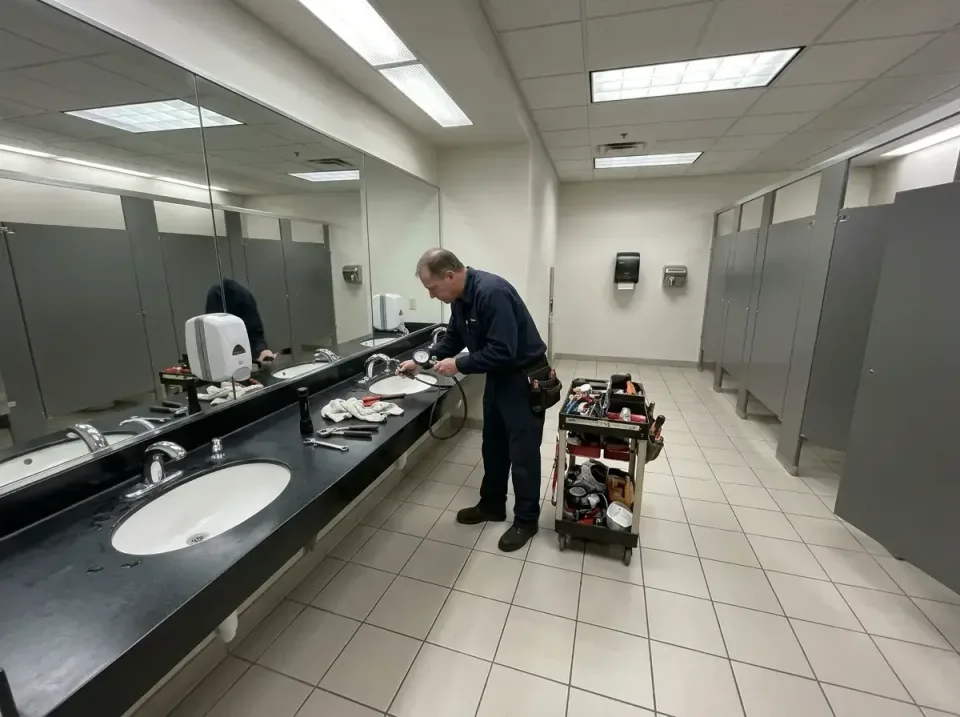
At Morgantown Personal Rapid Transit, riders rely on equipment working as a connected system; similarly, a home’s pressure symptoms can reflect a fault beyond the fixture that first draws attention. Our crew tests at an accessible hose bib, compares readings while water is still and flowing, then explains what the results indicate. A Water Pressure Testing visit can help separate a fixture issue from a system-wide pressure drop.
What can heavy rain change in a private well?
If a home uses a private well and upstairs pressure falters after heavy rain, ask whether other taps have changed too and note any new sediment or discoloration. Heavy rain can raise sediment in private wells, which may affect a filter or restrict flow; a pump or pressure tank issue can produce similar symptoms. Do not assume that adding a booster pump is the first fix.
Near Mothman Museum, homeowners may be familiar with private-well properties in the broader region; each well still needs its own assessment of supply, equipment, and water condition. We check the pressure equipment and the household’s symptom pattern before discussing repair options. For example, a well pressure tank repair may be relevant when the system’s tank is not maintaining pressure, but testing helps establish whether that is actually the cause.
Pressure Repairs Match the Source of the Problem
The right repair depends on whether weak upstairs flow comes from a fixture, the home’s distribution piping, or its supply equipment. Compare the symptom before choosing a fix.
| Option | Best for | Key detail |
|---|
| Whole-house pressure repair | Several floors or fixtures affected | Compare static and flowing readings; residential pressure commonly falls within 40–80 psi. |
|---|---|---|
| Regulator repair | City-water pressure is inconsistent | The regulator controls incoming pressure; a plumber checks its operation before replacing it. |
| Well pressure repair | Upper taps weaken in a well-supplied home | A well pressure switch may be set at 20/40 or 30/50 psi. |
Ice storms can disrupt power and water service, so a well-dependent home may need a plan for interrupted pump operation. Dolly Sods Wilderness represents rugged terrain where travel and access can be demanding; at a property, difficult access to equipment can also affect how a technician plans the inspection. Tamarack Marketplace gives readers a familiar regional reference, but the correct repair still comes from measurements at the home.
Prepare the Home for an Upstairs Pressure Check
A little preparation makes it easier to compare upstairs and downstairs flow. Keep the equipment area reachable; do not adjust pump controls yourself.
| Step | What to do | Useful detail |
|---|---|---|
| 1 | Identify affected fixtures and record when the pressure drops. | Note upstairs and downstairs taps. |
| 2 | Locate the main shutoff and clear access around the regulator. | Do not force a stuck valve. |
| 3 | If you have a well, keep the pressure tank area accessible and confirm pump power access. | Leave wiring and controls untouched. |
| 4 | Tell the technician about recent outages or changes in well flow. | Summer thunderstorms can cause outages affecting well pumps. |
| 5 | Allow the technician to test pressure at a hose bib and explain the readings. | Water may be shut off during repairs. |
At Point Pleasant Riverfront Park, river conditions are part of the local setting; a private well has its own supply limits, and drought periods can reduce private well yield. Snowshoe Mountain Resort is a reminder that access can be more challenging in elevated areas, so clear a safe path to well equipment before the appointment.
Get Help Tracing Weak Upstairs Flow
Weak upstairs taps are a symptom, not a diagnosis. A restriction, failing pressure control, or well-system problem may be behind it, so compare fixtures and note when the change happens before scheduling an inspection.
Summer humidity contributes to condensation in basements; if you find dampness near accessible plumbing, mention it during the visit, but do not assume moisture is the cause of low pressure. In valley locations that can experience temperature inversions, outdoor conditions may vary, while the right indoor repair still depends on testing the home’s plumbing.
New River Gorge National Park and Preserve is a familiar West Virginia landmark, but every home’s pipe layout and supply equipment needs an individual check. Contact West Virginia Plumbing Pros at (877) 773-0781.
We’ll test the system, explain the likely cause, and review practical options before work begins. Start with Water Pressure Testing.